
IndusInd Bank was the top loser in the Sensex pack, shedding around 3 per cent, followed by Dr Reddy's, NTPC, Maruti, Axis Bank, Bajaj Auto, Bharti Airtel and HDFC. NSE Nifty declined 76.15 points to 15,691.40.

From the Sensex pack, State Bank of India, ICICI Bank, IndusInd Bank, Axis Bank, Kotak Mahindra Bank, HDFC Bank, Reliance Industries were among the major laggards. Bucking the trend, auto stocks Tata Motors and Mahindra & Mahindra closed with gains.

From the Sensex firms, Tech Mahindra jumped 5.58 per cent, followed by Nestle, Tata Steel, NTPC, Tata Consultancy Services, Asian Paints, Wipro and Bajaj Finserv. Mahindra & Mahindra, Hindustan Unilever, Axis Bank and Bajaj Finance were among the major laggards.

Global funds, according to Christopher Wood, global head of equity strategy at Jefferies, are now beginning to pay more attention to India with the market now offering 30 companies with a market capitalisation over $25 billion.

SBI was the top gainer in the Sensex pack, advancing over 2 per cent, followed by L&T, ITC, Dr Reddy's, Axis Bank and PowerGrid. NSE Nifty rose 22.40 points to 15,197.70.
Benchmark stock indices Sensex and Nifty closed with losses in highly volatile trade on Thursday as banking and financial stocks retreated amid a weak trend in global equity markets. The 30-share BSE Sensex declined 89.14 points or 0.15 per cent to settle at 57,595.68. During the day, it touched a low of 57,138.51 and a high of 57,827.99. The broader NSE Nifty dipped 22.90 points or 0.13 per cent to settle at 17,222.75.

Equity benchmarks continued their winning momentum for the third day on Thursday and jumped over 1.50 per cent, tracking an overall bullish trend in Asian equities. On the political front, the BJP headed for a second straight win in politically crucial Uttar Pradesh and dominated the trends chart in three other states. The 30-share BSE benchmark Sensex opened in the green and further zoomed 1,595.14 points or 2.91 per cent to 56,242.47 during early trade.
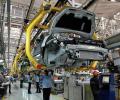
Automobile manufacturers are likely to report strong numbers for the September quarter of Financial Year 2023-24 (Q2 FY24), riding on growth across segments and offset by a marginal drop in overall two-wheeler (2W) volumes. Higher average selling price (ASP) year-on-year (YoY), which was necessitated by price hikes taken by original equipment manufacturers (OEMs), and an improved product mix will also aid revenues and margins. Moreover, commodity prices are down on a YoY basis, leading to higher margins in earnings before interest, taxes, depreciation and amortisation (Ebitda).

ICICI Bank was the top gainer in the Sensex pack, rising over 2 per cent, followed by Axis Bank, Infosys, HDFC twins, Bajaj Finserv and SBI. On the other hand, ITC, ONGC, Sun Pharma, Bharti Airtel and Titan were among the laggards.
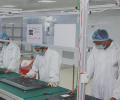
The stock of Dixon Technologies (India), the country's largest listed electronic manufacturing services (EMS) player, was up 6 per cent in 10 trading sessions, boosting the gains over the last three months to 21 per cent. The gains came following reports that Dixon will produce laptops in India in partnership with US and Chinese firms under the production-linked investment (PLI) scheme. It recently signed an agreement to make smartphones for Xiaomi India.

Equity benchmarks ended lower on Thursday as a fag-end sell-off wiped out early gains, with IT and bank stocks playing spoilsport amid monthly derivatives expiry. After remaining in the positive territory for most part of the trade, the BSE Sensex suddenly came under selling pressure during the last half-hour of the session, declining 310.71 points or 0.53 per cent to settle at 58,774.72. During the day, it hit a high of 59,484.35 and a low of 58,666.41.

Among the Sensex firms, Asian Paints, NTPC, Tata Motors, Bharti Airtel, State Bank of India, Larsen & Toubro, Wipro, Tech Mahindra, Tata Consultancy Services, ITC, HDFC Bank and Maruti were the biggest winners. Hindustan Unilever, Infosys, UltraTech Cement, Bajaj Finance, Nestle, Axis Bank, Reliance Industries and HDFC were among the laggards.

Ulhas Joshi, Head -- Sales, Rank MF, a mutual fund investment platform, answers your queries.

Ulhas Joshi, Head -- Sales, Rank MF, a mutual fund investment platform, answers your queries.

Investors may have to wait a little longer for Unified Payments Interface (UPI)-based block mechanism in the secondary market even as the market regulator has set the effective launch date as January 1, 2024. Several brokerage firms said they may take a few months more to implement it. Investors will be able to register for this facility only if the stock broker has opted for the UPI block facility.

Markets continued to fall on Monday, with the Sensex declining 94 points as investors remained cautious amid unabated selling by foreign funds and elevated crude oil prices ahead of the RBI's policy decision later this week. The 30-share BSE Sensex declined 93.91 points or 0.17 per cent to end at 55,675.32. During the day, it tanked 473.49 points or 0.84 per cent to 55,295.74.

Axis Bank was the top gainer in the Sensex pack, rallying over 4 per cent, followed by ICICI Bank, UltraTech Cement, HUL, SBI, PowerGrid, Bajaj Auto and Reliance Industries. NSE Nifty jumped 143.65 points to 14,485.

PowerGrid was the top loser in the Sensex pack, shedding around 3 per cent, followed by Asian Paints, Axis Bank, Kotak Bank, Bajaj Auto, SBI and M&M.
The country's most valuable lender HDFC Bank can perhaps no longer claim to be a favourite of foreign portfolio investors (FPIs). Two data indicators, both somewhat interconnected, point to this - the diminishing premium of HDFC Bank's American depositary receipts (ADRs) compared to local shares, and the ample investment opportunities available to FPIs in the domestic market. The ADR premium has shrunk to below 5 per cent, down from over 30 per cent in March 2021, and even lower than recent levels.

Equity benchmark Sensex gained 37 points on Thursday, tracking gains in index majors Kotak Bank, L&T and Bharti Airtel amid a largely negative trend in global markets. After a largely choppy session, the 30-share BSE index ended 37.87 points or 0.06 per cent higher at 60,298 after starting the trade on a weak note. During the day, it hit a high of 60,341.41 and a low of 59,946.44.
Among the Sensex firms, HCL Technologies fell the most by 2.4 per cent. IndusInd Bank (2.35 per cent), Infosys (2.28 per cent), Wipro (1.8 per cent), NTPC (1.71 per cent), Asian Paints (1.7 per cent), Tata Consultancy Services (1.36 per cent),Tech Mahindra (1.03 per cent) and SBI (1 per cent) were among the major laggards.

M&M was the biggest loser in the Sensex chart, falling 6.39 per cent, followed by Tech Mahindra, Nestle India, Bajaj Finance, Axis Bank, ITC, JSW Steel, HDFC Bank and RIL. On the other hand, Sun Pharma, Tata Motors, Bharti Airtel, L&T and Infosys were among the winners, rising up to 2.10 per cent.


Omkeshwar Singh, Head, Rank MF, a mutual fund investment platform, answers your queries.

Nikunj Saraf, Vice President Choice Wealth, answers your queries.
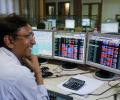
Reliance Industries was the top gainer in the Sensex pack, rising over 1 per cent, followed by ICICI Bank, SBI, HDFC, M&M, Axis Bank, Bajaj Finance, Titan and Infosys. NSE Nifty advanced 42.20 points at 15,722.20.

ITC was the biggest gainer in the Sensex pack, rising nearly 3 per cent, followed by Kotak Mahindra Bank, ICICI Bank, Maruti, Bharti Airtel, State Bank of India, Sun Pharmaceutical Industries, Axis Bank, Reliance Industries, Hindustan Unilever and JSW Steel. On the other hand, Infosys, UltraTech Cement, HCL Technologies, Bajaj Finserv, Larsen & Toubro, Titan, Tata Consultancy Services and Wipro were the laggards.

The Sensex pull-back was mainly staged by constant selloffs in banking shares, led by ICICI Bank, Axis Bank and IndusInd Bank. Of the Sensex constituents, 19 shares suffered losses.

Reliance Industries was the top laggard in the Sensex pack, shedding over 2 per cent, followed by UltraTech Cement, SBI, Tata Steel, HDFC and Axis Bank. NSE Nifty fell 56.40 points to 16,238.20.

Omkeshwar Singh, Head, Rank MF, a mutual fund investment platform, answers your queries.

Omkeshwar Singh, head, Rank MF, a mutual fund investment platform, answers your queries.

HDFC was the top gainer in the Sensex pack, surging around 5 per cent, followed by Kotak Bank, ICICI Bank, SBI, HDFC Bank and Axis Bank. On the other hand, Titan, Nestle India, Ultratech Cement and Sun Pharma were among the laggards. NSE Nifty surged 128.05 points to its all-time peak of 16,246.85.

Omkeshwar Singh, Head, Rank MF, a mutual fund investment platform, answers your queries.

Axis Bank was the top loser in the Sensex pack, tanking over 6 per cent, followed by Bajaj Finance, Bajaj Finserv, IndusInd Bank, HUL and Tata Steel. NSE Nifty fell 57.45 points to 18,210.95.

Gold burnished its image as the go-to asset class during turbulent times. However, investors seemed to have missed the bus. Net inflows into gold exchange-traded funds (ETFs) plunged to a four-year low of Rs 653 crore in 2022-23 (FY23), even as gold emerged as the top-performing asset class.

Among the Sensex firms, Wipro, Axis Bank, Titan, UltraTech Cement and HDFC Bank, HDFC, HCL Tech and Reliance were the gainers.

Bajaj Finserv was the top gainer in the Sensex pack, rising over 4 per cent, followed by L&T, HDFC, Axis Bank, SBI, Reliance Industries and IndusInd Bank. NSE Nifty soared 276.30 points to its new closing peak of 17,823.
After a turnaround in performance by Indian equity markets since July that has seen the S&P BSE Sensex and the Nifty50 wipe out the year-to-date losses, analysts suggest investors start nibbling into stocks that are focused on the domestic economy. While they say intermittent corrections, led by policies of global central banks and other economic data, cannot be ruled out, analysts expect India's relative outperformance among global equity markets to continue as it looks better placed with a healthy economic recovery, and remains one of the fastest growing major economies. In this backdrop, Neeraj Chadawar, head of quantitative equity strategy at Axis Securities, believes that amid global slowdown, aggressive tightening by the central banks, and preference for domestic interests first (by the local government), export-oriented themes are likely to be muted or will deliver conservative returns in the near-term.

'Just the amount of work which is there just to become more and more successful in banking. For this to happen you need to have leaders who understand technology.'
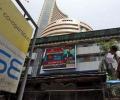
As many as 267 of 453 companies from the BSE500 index are trading above their consensus price targets, according to the data compiled by Bloomberg. Not all companies in the BSE500 index are tracked by analysts.
